



Update (Feb. 26, 2026): USNS Mercy Transiting South Toward Panama Canal
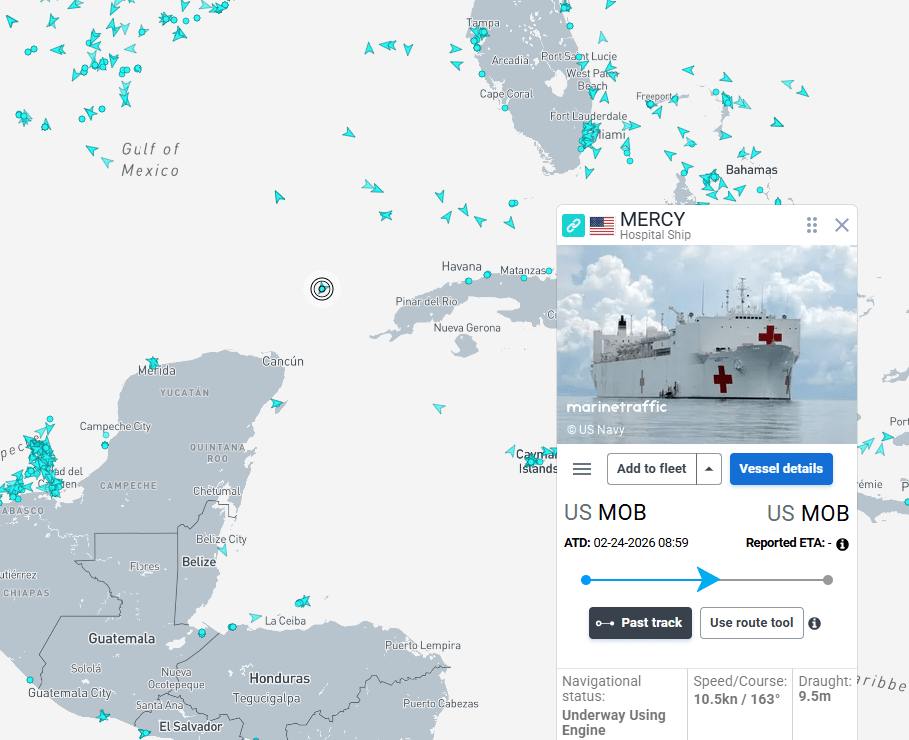

The movement follows Mercy’s recent departure from dry dock in Mobile, Ala., where the ship had undergone extended maintenance.
Current routing places the vessel well south of the Florida Straits and moving away from the North Atlantic.
Transit through the Panama Canal would position Mercy for Pacific operations consistent with its homeport alignment.
The Navy’s white-hulled hospital ship USNS Mercy slipped out of Alabama Shipyard yesterday and headed south into the Gulf of Mexico at about 10.5 knots, led by an ocean-going tug like a nervous chaperone.
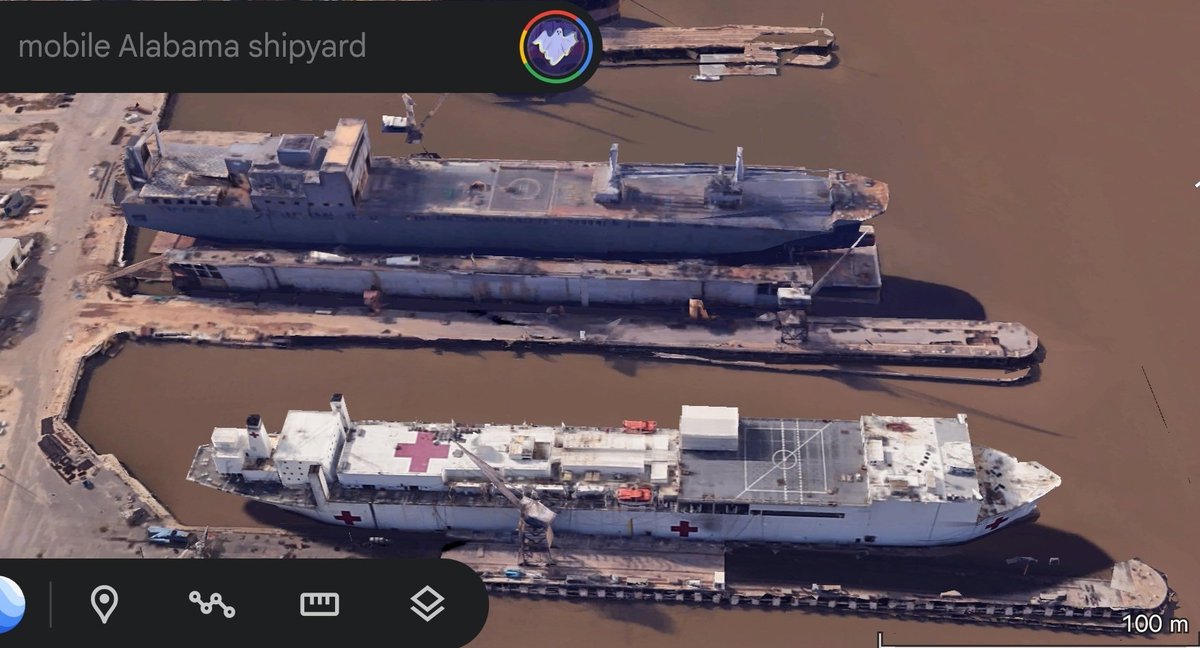
Officially, she had just completed urgent drydock repairs tied to a ballast tank failure. Unofficially? The ship appeared to leave Mobile with a little more pep than one normally associates with a 1,000-bed floating hospital that had been in pieces just days before.
That timing matters.
Because days earlier, a social media post declared that a U.S. hospital ship was “on the way!!!” to Greenland. Exclamation points included.
Here’s the problem: moving a hospital ship is not like dispatching an Uber.
USNS Mercy

Right now, what we know is this:
-
She left Mobile after what the Navy described as urgent repairs.
-
She is making steady speed.
-
She has a tug in company.
-
There has been no formal order publicly issued sending her to Greenland.
If the ship were actually being surged north for a humanitarian mission, we would expect to see medical reservists activated, supplies embarked, aviation detachments assigned, and clear operational messaging from the chain of command.
We haven’t seen that.
What we have seen is a ship that looks like it was hurried out of drydock to get back to sea — and into the headlines.
Greenland: Bring Your Own Dock
Even if someone decided tomorrow to send Mercy north, there’s a stubborn little obstacle called geography.
Greenland does not have a dock long or deep enough to berth her.
The harbor at Nuuk — Greenland’s capital — offers roughly 10.5 meters of depth. Mercy draws about 10 meters. That’s razor-thin under-keel clearance for a vessel that size. And length matters, too. You can’t park a 900-foot ship in a 600-foot slip and call it good.
So the likely alternative would be anchoring offshore and ferrying patients and supplies in by helicopter or boat.
In late winter.
In Arctic waters.
With pack ice.
In a hull that is not ice-strengthened.
There’s a difference between bold and reckless. Mariners know the line.
Meanwhile, Reality Continues
Mercy’s sister ship, USNS Comfort, remains in Alabama Shipyard. Neither vessel appears configured today for an Arctic humanitarian deployment.
And Greenland’s prime minister has already made clear the island provides universal public healthcare and has not requested such assistance.
So what does Mercy’s movement likely represent?
The most boring answer — which is usually the correct one — is this: the ship completed urgent repairs and is repositioning for her scheduled West Coast maintenance availability.
Ships move all the time. Headlines do, too.
But steel and seawater don’t care about social media. A 900-foot ship still needs a pier long enough to tie up. Ice still scrapes paint. Ballast tanks still crack.
And hospital ships still require orders before they sail into history.
For now, Mercy is underway. Whether she is heading toward routine overhaul — or political theater — will become clear not by exclamation points, but by course changes.
Mariners are watching the wake.