

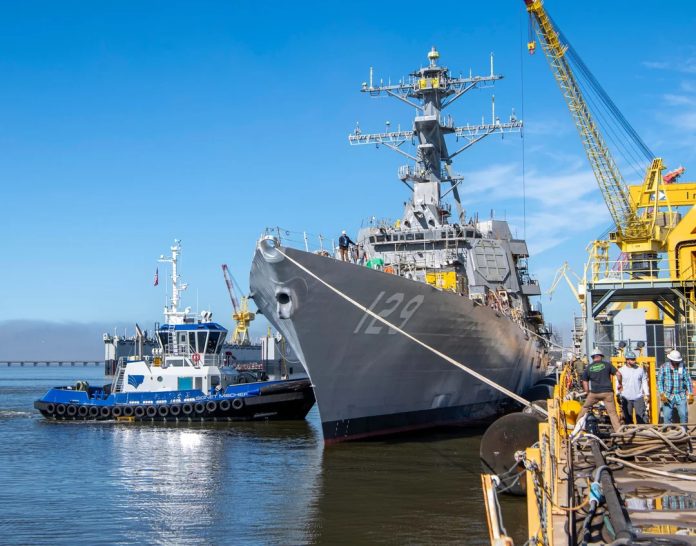
The Navy has a 30-year plan to build a bigger fleet. Sailors and their families are already paying for the shortage.
ANALYSIS
Hung Cao told senators why the Navy keeps extending deployments. It has 286 ships. He says it needs 355. When there aren’t enough ships to cover the missions, the ships already out there stay out longer. Their sailors miss more time at home, and the ships come back needing more work. themilitaryreport.com
I saw that strain aboard USS Kitty Hawk when Bill Clinton was president. Thirty years later, we’re still asking crews and maintenance shops to make up the difference.
Now we have a price for the Navy’s plan to build its way out. The Congressional Budget Office puts it at nearly $54 billion a year for 30 years, about 18 percent more than the Navy estimates. If the plan holds, the fleet grows to 398 ships by 2056. Getting there would require American shipyards to turn out substantially more tonnage than they have over the past decade.
Here’s the part worth reading twice. CBO says the fleet’s firepower would rise slightly over the next five years and then decline until 2035. The Navy would retire missile-capable ships faster than it brings their replacements into service. A bigger fleet in 2056 still leaves commanders with a gap to manage in the 2030s.
Senate appropriators have their own ideas about what to buy first. Their fiscal 2027 draft puts $41.6 billion into shipbuilding, $18.5 billion below the request. It drops $1 billion the Navy wanted to get an early start on the Trump-class battleship and adds $1.9 billion for a second Arleigh Burke-class destroyer. Those choices are in the appropriators’ draft, which still has to make its way through Congress.
The battleship deserves a hard look. The Navy wants 15 of them. CBO estimated in August that they would cost about $275 billion to build, with the first ship alone costing about $23 billion. Before Congress puts down the first billion, it ought to ask when the first battleship could deploy and what else those yards could deliver in the meantime.
Even a second Burke takes years to build. The fleet has to cover its missions while those ships are still in the yard. That puts another decision in front of Washington right now. If the Navy has more work than its ships and crews can sustain, which missions can wait?
Leave that question unanswered and we know how the Navy will cover the next gap. Somewhere at sea, a crew will get word that it’s staying out longer. Back home, families will change their plans again.