

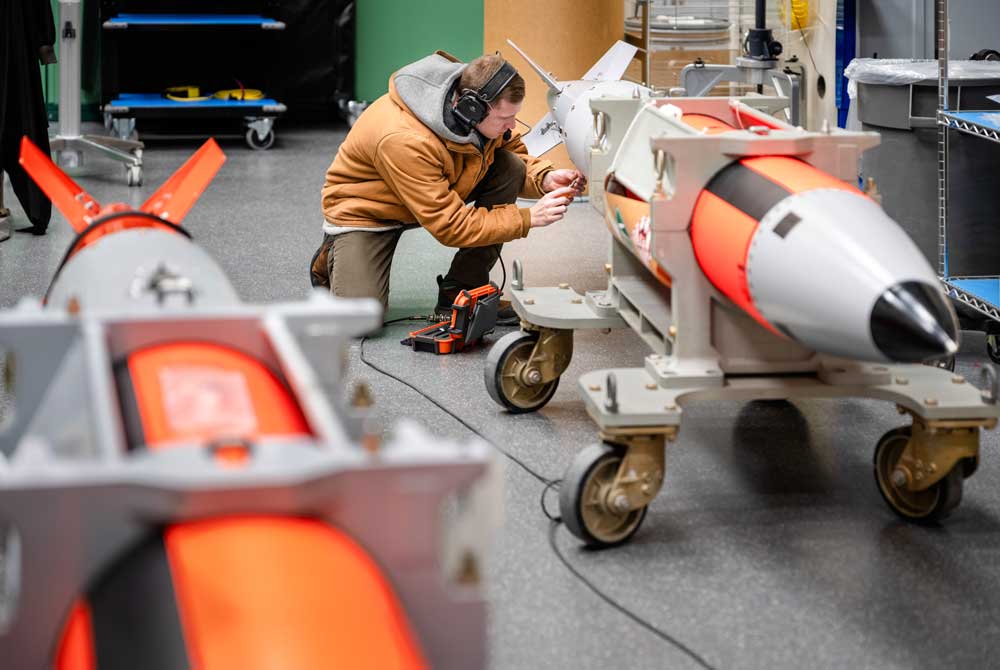
WASHINGTON — The U.S. is speeding up production of its next-generation nuclear bomb by more than 25 percent, shaving seven months off the original timeline in a move that signals rising concern over an increasingly unstable world.
The new weapon, the B61-13, is now expected to roll off the production line faster than planned, following a shift in priorities at Sandia National Laboratories — the lead developer on the project. Officials say the goal is simple: get it done faster, without cutting corners.
Behind the scenes, a specialized team dug into every part of the development pipeline — from Pentagon paperwork to final assembly — to figure out how to compress a process that normally takes half a decade. And they did it.
The result? A new nuclear bomb, nearly 24 times more powerful than the one dropped on Hiroshima, is moving toward full-scale production with a new sense of urgency.
The B61-13 is the Pentagon’s answer to what it sees as a deteriorating global landscape — from Russia’s full-scale war in Ukraine to the growing threat of a broader regional conflict. The weapon is designed to strike deep, hardened military targets with precision and overwhelming force.
It’ll be carried by aircraft like the Air Force’s new B-21 Raider, a stealth bomber built for the next war — not the last one. It can also be deployed by the aging B-2 Spirit until it’s phased out.
The Department of Energy confirmed that the bomb gives the president what it calls “enhanced strike options” — a government term that means more firepower, delivered more flexibly, when the stakes are sky-high.
This latest move comes just months after the U.S. completed a $9 billion overhaul of its older B61-12 bomb. That upgrade bought more time — and more bang — out of Cold War-era stockpiles. Now, with the B61-13, the mission shifts to building something newer, tougher, and faster.
Officials haven’t said exactly when the bomb will be deployed or how many are planned. But the message is clear: the U.S. isn’t waiting around. With tensions rising and adversaries on the move, Washington is betting that speed — and power — still matter.