

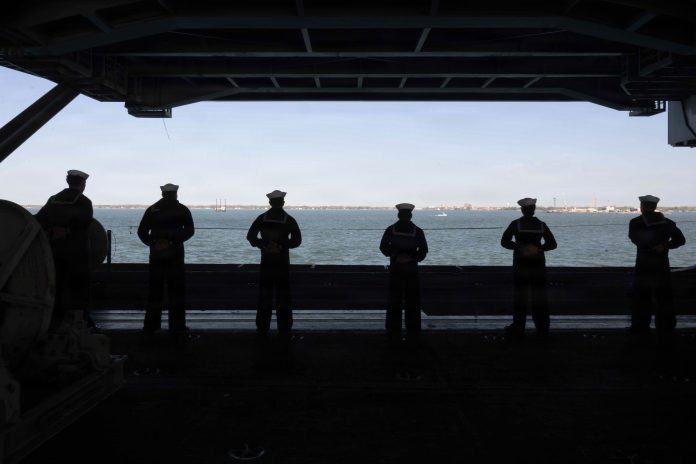
The USS George H.W. Bush isn’t coming home for the holidays. Senior Navy officials have told families to prepare for a deployment that could stretch to a full year while the service readies another carrier to take its place.
That is a long way from the six to seven months families initially expected. They say the return has already been pushed back twice. Now they face the possibility of waiting until March 2027—with no guaranteed homecoming date.
Bush left Naval Station Norfolk on March 31, 2026, carrying Carrier Air Wing 7. Its deploying strike group included three guided-missile destroyers: USS Ross, based in Norfolk, and USS Donald Cook and USS Mason, both based in Mayport, Fla. The Navy described the departure as a regularly scheduled deployment.
More than seven months later, the families got another extension.
At a Nov. 9 town hall at Naval Station Norfolk, acting Navy Secretary Hung Cao, Fleet Forces commander Adm. Karl Thomas and Vice Chief of Naval Operations Adm. James Kilby faced relatives looking for answers.
According to MS NOW, which reviewed an attendee’s recording of the meeting, Navy leaders told families the strike group would miss the holidays and warned them to prepare for a worst-case deployment of 12 months. The Military Report has not independently reviewed that recording.
Thomas said the holiday extension was so fresh it had not yet made the official orders book.
The families got the warning. They still don’t have a date.
Navy leaders said the USS Dwight D. Eisenhower is being prepared to relieve Bush. No handoff date was provided.
Eisenhower’s availability helps explain the squeeze. The carrier completed a 15-month maintenance period in April. In September, it was working through training toward a deployment in the first half of 2027. Training and certification must come before a carrier and its escorts can take over a combat mission.
Meanwhile, Bush keeps standing the watch.
Asked what would bring the strike group home, Cao supplied an answer reaching far beyond a ship’s deployment schedule.
“The criteria is for them to agree to a non-nuclear Iran,” he said.
Kilby said the final deployment decision rests with Defense Secretary Pete Hegseth.
“We push back, but ultimately the Secretary of Defense makes the decision based on the circumstances,” Kilby told families.
The strain goes beyond calendars.
Bush went 187 days without a port visit before reaching Phuket, Thailand, on Oct. 4. After that break, the carrier returned to Arabian Sea operations. At the town hall, officials acknowledged problems getting fresh produce to the ships before it spoiled.
And the Navy is warning that this kind of deployment will persist. Its top leaders said in October that sailors should expect deployments of roughly 10 to 11 months for the next couple of years. Longer deployments also mean more maintenance, disrupting the availability of ships needed for the next rotation.
That is the bill coming due when Washington’s demands outrun the fleet available to meet them.
The sailors can do their jobs. Their families can shoulder hard news. What neither should have to do is mistake a moving deadline for a plan.