

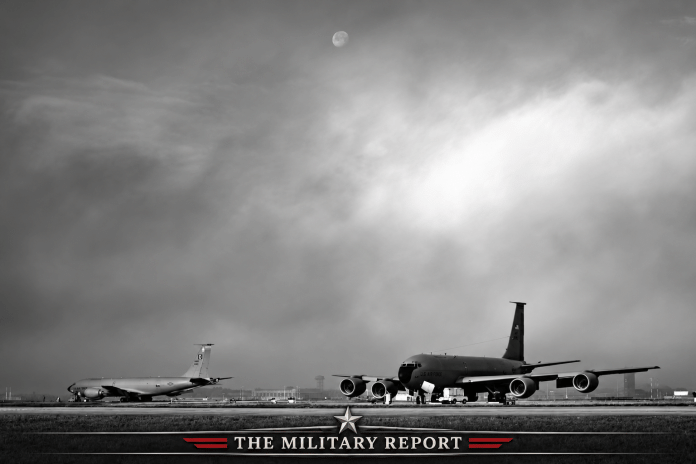
First the bombers. Now the tankers.
The U.S. Air Force moved aircraft out of RAF Mildenhall in England on Monday after receiving a threat, a U.S. official told The Associated Press. Flight trackers identified 13 aircraft departing for other bases in Europe, including aerial refueling tankers and Ospreys.
The official described the move as a precaution. Some aircraft were stationed at Mildenhall; others were passing through. They could return. The official did not identify the source or nature of the threat. The Wall Street Journal reported an Iranian connection, citing people familiar with the matter. That distinction matters: a threat prompted the move, but who was behind it remains publicly unconfirmed.
The departures follow the withdrawal of American bombers from RAF Fairford amid an investigation into a suspected Iran-linked plot. Two men have since been charged under Britain’s National Security Act.
Mildenhall houses the 100th Air Refueling Wing, the only permanently assigned U.S. aerial refueling wing in Europe. Those tankers help other aircraft reach their targets, stay on station and get home.
They are part of the machinery that makes American airpower work. Moving them raises practical questions: Will crews have the maintenance support they need? Will tankers spend more time reaching the aircraft they support? Will missions change?
None of those effects has been publicly established.
Dispersing aircraft when intelligence points to danger is sound military judgment. A commander’s job includes keeping crews alive and aircraft available for the next mission.
But there is a larger problem here. An adversary does not have to destroy an aircraft to impose a cost. A credible threat can force movements, consume manpower and complicate operations.
The unanswered question is whether this is a short precaution or another warning that the bases supporting American airpower need stronger protection.
Moving the aircraft buys time. What commanders do with that time matters.
The same concern has reached American flight lines. At Tyndall Air Force Base in Florida, the Air Force is looking into installing anti-drone netting around six shelters used by F-35 fighters. The proposal remains at the market-research stage, with no guarantee of a contract.
The idea is basic: put a physical barrier between a small drone and a parked aircraft. Netting cannot make a base invulnerable. But an aircraft does not have to be protected against every weapon for protection against one weapon to be worth having.
Stealth helps a fighter survive in the air. On the ground, it still needs somebody watching the fence—and something between it and an incoming drone.