

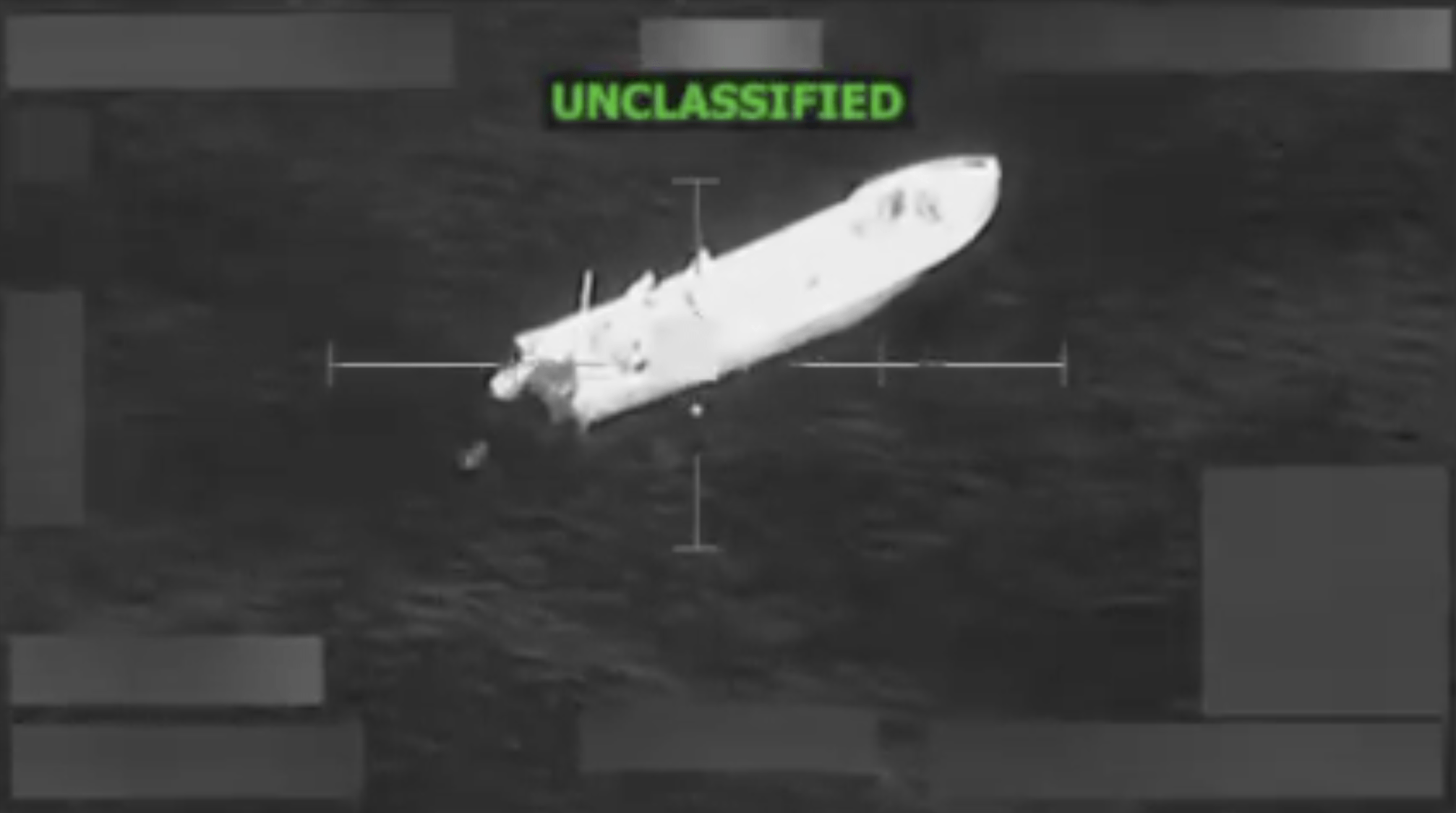
The White House offered a new and sharply revised account Monday of the deadly strike on a suspected Venezuelan narco-boat — clarifying that the second, lethal engagement was ordered not by Defense Secretary Pete Hegseth, but by Adm. Mitch Bradley.
Pressed repeatedly about a report alleging Hegseth personally ordered the killing of all passengers aboard the vessel, White House press secretary Karoline Leavitt said the order for the follow-on strike came from Bradley.
“Adm. Bradley worked well within his authority and the law, directing the engagement to ensure the boat was destroyed and the threat to the United States of America was eliminated,” she said.
Leavitt also called the strike an act of self-defense and said President Trump “has a right to take them out if they are threatening the United States of America.”
The administration’s wording now places the operational responsibility squarely on a uniformed officer — a notable correction from the earlier assumption, fueled by reports and questions, that Hegseth personally directed lethal action.
But Still Missing: What Happened in the Water
Even with this new clarification, the White House still did not say whether U.S. forces engaged people who had gone into the water after the vessel was destroyed. The legal standard remains unchanged: once individuals are incapacitated or no longer resisting, they are considered hors de combat and cannot be targeted.
Leavitt did not address that part of the incident, despite multiple opportunities. The administration’s emphasis stayed on the boat, the threat, and the authority of the admiral — not the status of the survivors.
Congress Still Moving In
With the chain of command clarified but the central question still unanswered, congressional committees are preparing to review the strike. Staffers say they will request:
-
strike footage,
-
targeting logs,
-
command-and-control records,
-
and any JAG reviews tied to the engagement.
The Hill now has a cleaner name to focus on — Adm. Bradley — but the question that triggered the oversight drive still stands: what happened after the boat went under?
Until the Pentagon releases specifics, the administration’s revised account answers one controversy and leaves the other untouched.