

Commercial pilots don’t usually end up as early-warning sensors for military escalation. But over the past several weeks, that’s exactly what’s happened near Venezuela.
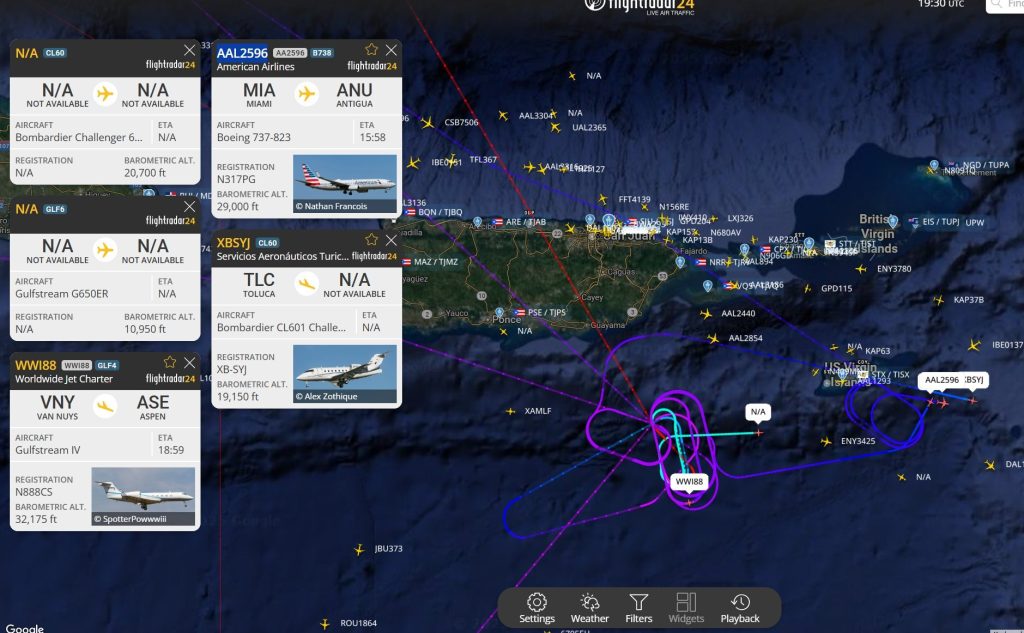
Aircrews flying routine routes through the southern Caribbean have been reporting something that gets their attention fast: GPS dropping out mid-flight. Navigation screens go fuzzy. Position data jumps or disappears. Crews revert to backups—old-school procedures they train for but rarely need.
This isn’t a software bug. It isn’t solar weather. And it isn’t accidental.
Both The New York Times and Bloomberg have now reported that GPS interference is spreading in the vicinity of Venezuela, affecting civilian aircraft operating well outside any combat zone. That matters—not because passenger planes are being targeted, but because this is what modern conflict looks like before it becomes visible.
Wars no longer begin with explosions. They begin by breaking the map.
GPS is a convenience system for civilians. For militaries, it’s a dependency—one they’ve been training to fight without for years. The signals are weak by design, coming from satellites tens of thousands of miles away. They’re easy to jam, easy to spoof, and easy to drown out if you control the local electromagnetic space.
When GPS starts failing over a region, it’s a sign that someone is deliberately shaping that space.
The public tends to imagine jamming as an act of desperation or defense. In reality, it’s neither. Jamming is preparatory. You don’t scramble navigation unless you expect movement—aircraft, ships, special operations teams—or you want to deny an opponent the ability to see patterns forming.
That’s why this matters in context.
At the same time, commercial pilots are reporting GPS outages, U.S. special operations aircraft have been quietly concentrating in the Caribbean. Transponders go dark. Tracking data disappears. The Pentagon declines comment. This isn’t secrecy theater; it’s standard procedure when operations move from contingency planning into real-world positioning.
Electronic warfare is the connective tissue between those developments.
When militaries expect friction, they don’t wait for the first shot. They start by degrading sensors—especially the civilian-facing ones that broadcast everything in the open. ADS-B, AIS, GPS: these systems have made modern movement transparent. Turning them off—or making them unreliable—restores ambiguity.
Ambiguity favors the side preparing to act.
Venezuela is not new to this game. Its military has spent years hardening key areas against surveillance, often with outside technical help. The U.S. is even more practiced. Both sides understand that controlling the electromagnetic environment buys time, concealment, and initiative.
The result is what pilots are now experiencing: a battlespace that leaks into civilian life.
This is the uncomfortable truth of 21st-century conflict. There is no clean boundary between “military” and “commercial” domains when navigation, communications, and timing all ride on shared infrastructure. When a military starts pushing hard on the spectrum, civilians feel it first—not because they’re targets, but because they’re not armored against it.
And that’s the warning sign policymakers tend to miss.
Commercial aviation losing GPS isn’t a crisis yet. Pilots are trained for it. Aircraft are built with redundancies. But it is a signal—one we’ve seen before. In Eastern Europe. In the Middle East. In the Pacific. The pattern is consistent: interference appears, denials are issued, silence follows, and only later does the public learn what phase the operation had already entered.
This is not about imminent invasion or dramatic strikes. It’s about thresholds.
Jamming navigation signals crosses one.
It says someone believes the risk of confusion is worth it. It says the electronic environment is no longer being treated as neutral. And it says planners are thinking about timelines measured in hours and days, not months.
That doesn’t mean war is inevitable. But it does mean the situation has matured beyond rhetoric.
The most revealing part of this episode isn’t the technology—it’s the reaction. Military commands decline comment. Airlines quietly adjust procedures. Regulators issue advisories without explanation. No one panics, because everyone inside the system recognizes what’s happening.
The map is being softened up.
For decades, escalation was something you could see: troop movements, naval deployments, missile alerts. Today, it often shows up as absence—signals gone quiet, tracks disappearing, navigation failing just often enough to matter.
When civilian pilots start saying the sky itself feels unreliable, it’s a sign the professionals are already operating in a different phase of the playbook.
And by the time the public debate catches up, the electromagnetic groundwork has usually been laid.