

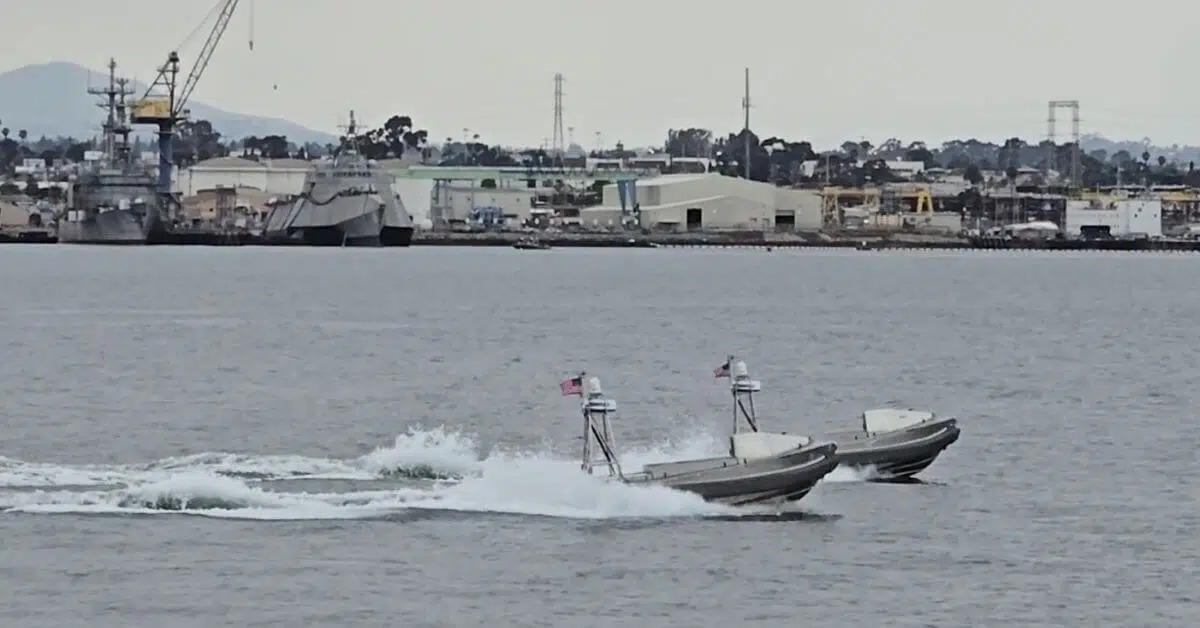
The Navy didn’t just lose signal off the California coast.
It lost control.
In April 2025, during unmanned vessel tests, operators started seeing the cracks. Too many systems. Too much data. The network strained. Connections dropped. Control got shaky.
They kept going.
Then came August 2025.
Starlink went down—global outage, just like that.
For nearly an hour, the Navy lost contact with two dozen surface vessels.
Not degraded. Not delayed.
Gone.
Drones in the water. Nobody driving.
That’s the headline.
But it’s not the story.
Because we’ve already seen what this looks like when it’s not a test.
In Ukraine, that same network went dark during combat operations. Units lost drone feeds. Missions stalled. Commanders were left blind at the worst possible moment.
And then it got worse.
Elon Musk reportedly restricted Starlink coverage during a Ukrainian offensive.
Not a system failure.
A decision.
One man. One company. One switch.
Now connect the dots.
The Navy is building toward a future of unmanned systems—boats, drones, distributed forces. All of it depends on constant, high-bandwidth connectivity.
And increasingly, that connectivity runs through a commercial network the military doesn’t own.
Doesn’t control.
And, as April and August 2025 proved, Commercial companies can’t guarantee.
Starlink works. That’s why it’s everywhere. It’s fast, it’s cheap, and it’s already in orbit while the Pentagon is still drafting requirements.
So they use it.
They rely on it.
They build doctrine around it.
Until the day it blinks.
Off California, it was an outage.
In Ukraine, it was outage—and choice.
Different causes.
Same result.
Silence.
And in modern warfare, silence isn’t just inconvenient.
It’s lethal.
The Navy will keep testing. The Pentagon will keep leaning on what works today.
But the lesson is already written in the timeline:
April 2025—strain.
August 2025—failure.
Next time, it won’t be a test range off California.
And nobody’s going to get an hour to wait for the signal to come back.