

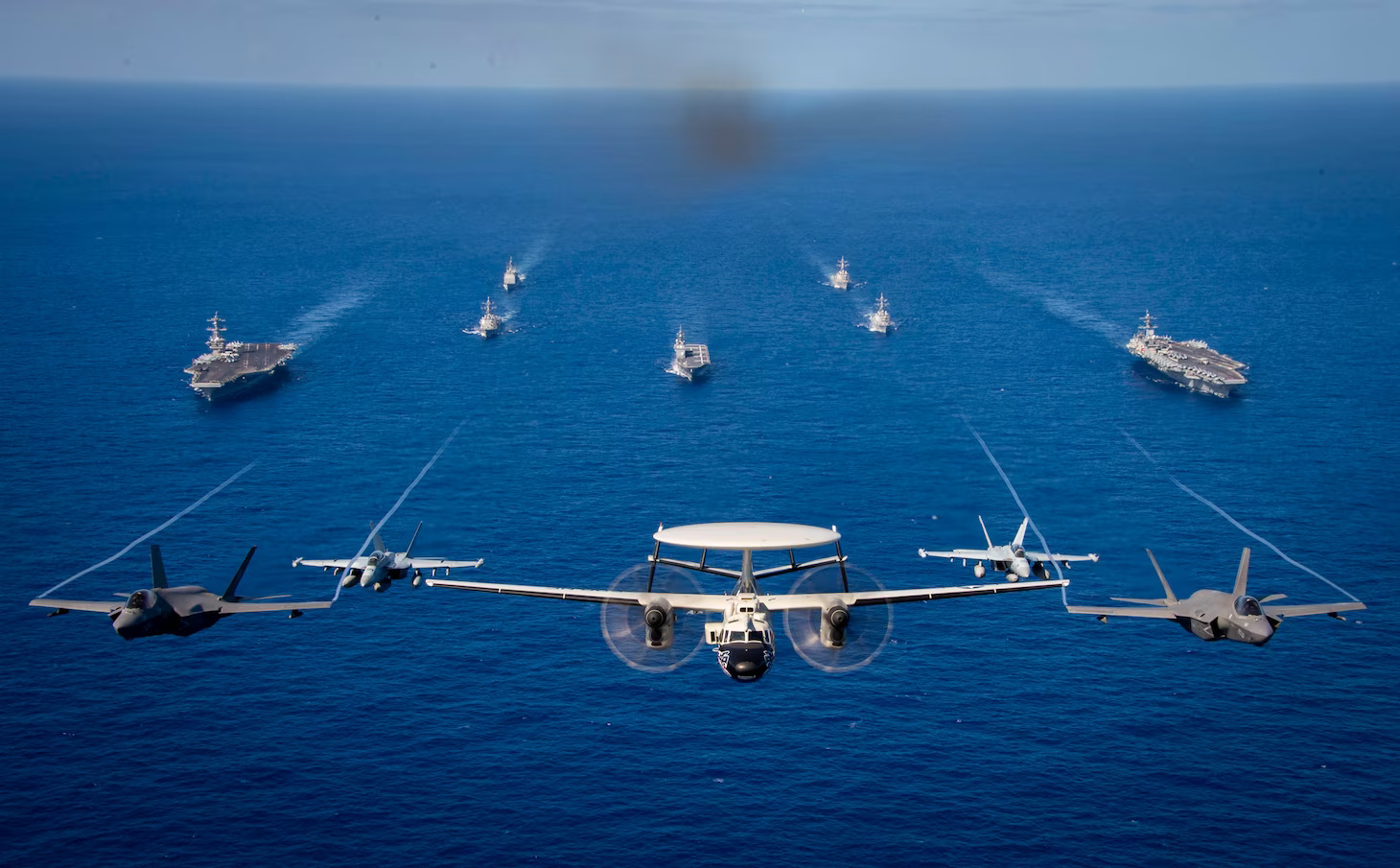
The Carl Vinson Carrier Strike Group (CSG), Theodore Roosevelt CSG, and the Japan Maritime Self-Defense Force (JMSDF) recently conducted exercises in the Philippine Sea. This event provided both maritime forces with an opportunity to work together on various joint operations. These operations included improving maritime communication, air warfare skills, and coordinated flight operations. The primary goal was to enhance their readiness for maritime operations and combat in the region.
These groups were led by their respective flagships—the USS Carl Vinson (CVN 70) of CSG-1 and the USS Theodore Roosevelt (CVN 71) of CSG-9. The Japan Maritime Self-Defense Force contributed its Hyuga-class helicopter destroyer, JS Ise (DDH 182).
Rear Adm. Carlos Sardiello, commander of CSG-1, highlighted the ability of the U.S. and Japan to quickly assemble naval forces in the Indo-Pacific, underscoring their mutual security interests. He said that similar operations have been conducted by the Vinson strike group since 2001, with the most recent one occurring in November 2023 alongside the Ronald Reagan Carrier Strike Group and the JMSDF in the Philippine Sea.
During this multi-day event, ships and aircraft from both allied forces operated in line with international laws in international waters. They engaged in various activities such as air defense drills, sea surveillance, cross-deck exercises, and tactical maneuvers. These activities aimed to enhance their abilities for advanced combat and to better coordinate their efforts.
Notably, this was the most recent occurrence of CSG-1 participating in a large deck event in the Philippine Sea, alongside the Ronald Reagan Carrier Strike Group and the JMSDF. Assets from CSG-1 included the USS Carl Vinson (CVN 70), Carrier Air Wing (CVW) 2, Ticonderoga-class guided-missile cruiser USS Princeton (CG 59), and Destroyer Squadron (DESRON) 1, comprising Arleigh Burke-class guided-missile destroyers.
CSG-9’s ships and aircraft included the USS Theodore Roosevelt (CVN 71), guided-missile cruiser USS Lake Erie (CG 70), nine squadrons of Carrier Air Wing (CVW) 11, and three Arleigh Burke-class guided-missile destroyers from Destroyer Squadron (DESRON) 23.