

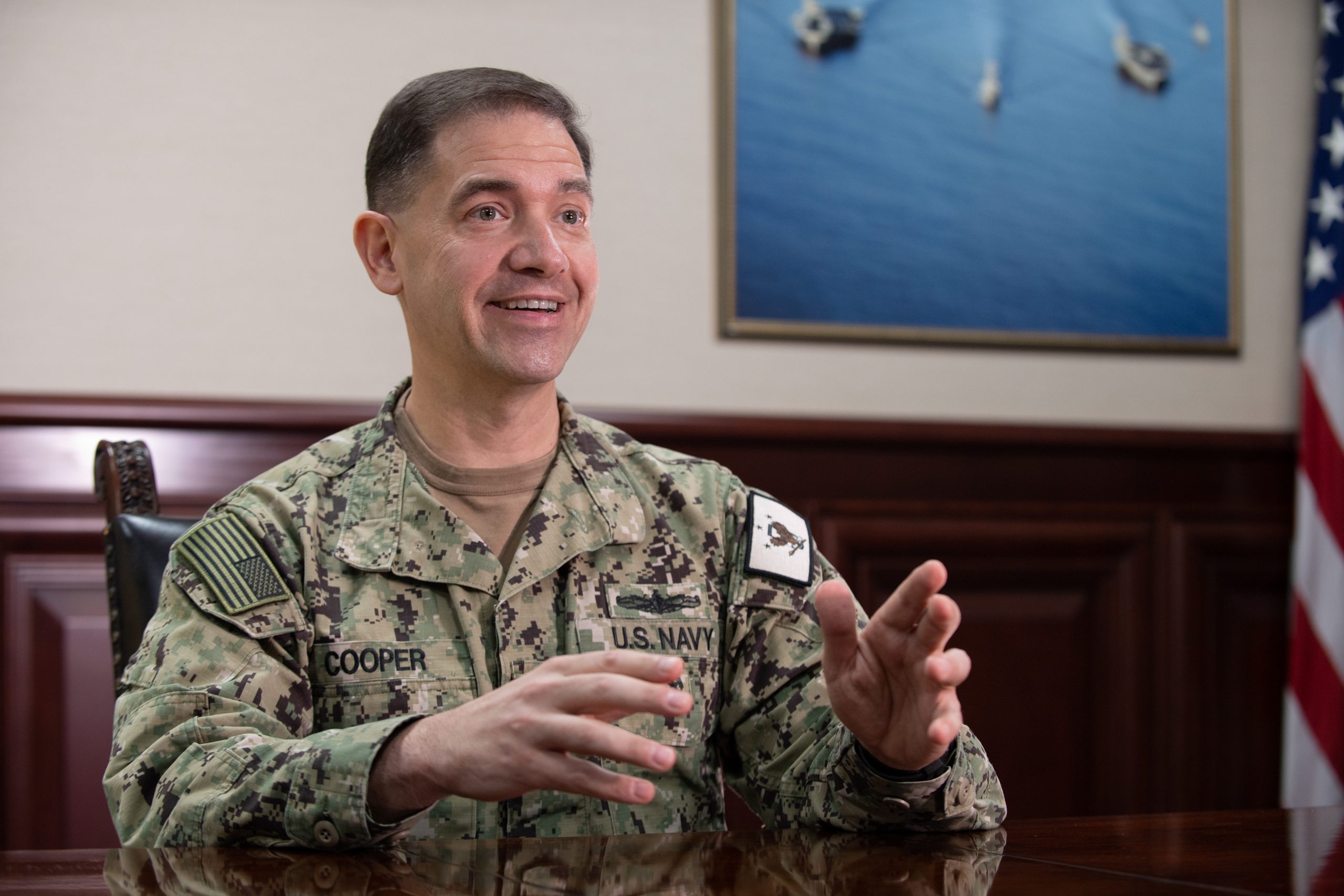
Interviewer: Thank you, Vice Adm. Cooper, for joining us today to discuss maritime security in the Red Sea and provide an update on Operation Prosperity Guardian.
Vice Adm. Brad Cooper: Thank you for having me. I’d like to emphasize that Operation Prosperity Guardian (OPG) is entirely defensive. Since its announcement by the Secretary of Defense on Dec. 18, there have been significant developments.
Interviewer: Could you share some key points about the operation?
Cooper: Absolutely. Firstly, the number of participating nations has increased, and their contributions are substantial. Around 1,500 merchant ships have safely passed through the Red Sea since OPG began. Also, our collaboration with the maritime shipping industry has significantly improved, ensuring persistent two-way communications during transits.
Despite this, the Houthi attacks have persisted, showing no signs of stopping. This underlines the need for a defensive operation like OPG.
Interviewer: Can you provide more context on these Houthi attacks?
Cooper: Since Nov. 18, there have been 25 attacks against merchant vessels in the southern Red Sea and Gulf of Aden. The latest was an attack using an unmanned surface vessel by the Houthis, which fortunately caused no casualties or ship damage. However, the use of such a vessel is concerning.
Interviewer: How are you responding to these threats?
Cooper: We’ve established Task Force 153 to secure the Red Sea. The CMF partners have conducted numerous multinational exercises under this Task Force, but the current situation required a dedicated operation, hence OPG.
OPG’s operational concept is like playing zone defense, actively patrolling and communicating at sea. Prior to this operation, naval presence in the southern Red Sea was sporadic. Now, several nations are committed to patrolling these waters, leading to the largest surface and air presence in years.
Interviewer: What impacts has Operation Prosperity Guardian had?
Cooper: The coalition has grown, with countries like Greece and Denmark expressing willingness to send ships. Since OPG started, no Houthi UAVs or missiles have hit any merchant vessels. Our actions, including shooting down 19 drones and missiles and sinking three small boats, reflect a proactive defensive role.
Interviewer: What about the involvement of the maritime industry?
Cooper: Our engagement with the shipping industry has significantly increased. We maintain strong, frequent communications at multiple levels, contributing to their sense of security and freedom of navigation in the region.