
The U.S. Army is putting drones at the center of how it plans to fight its next war.
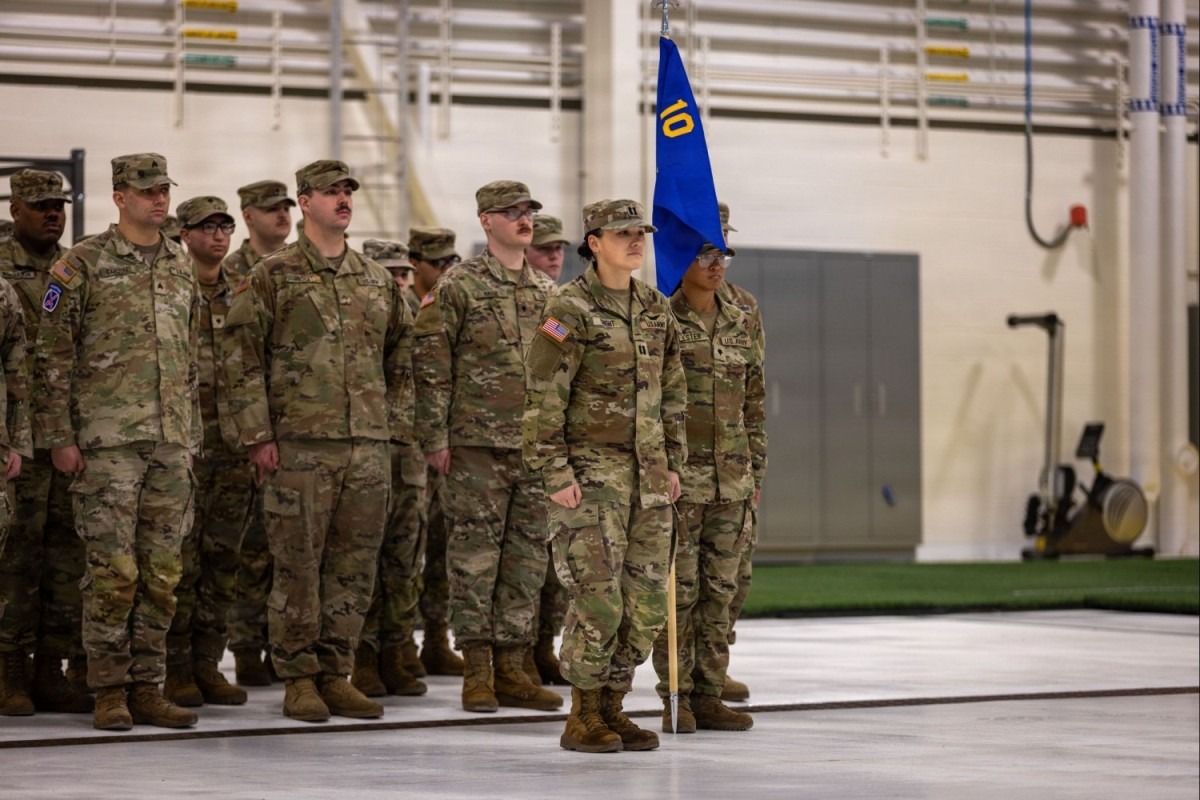
Earlier this month, the 10th Mountain Division formally activated Fox Company, a new unit built specifically for what the Army calls “drone dominance.” Assigned to the 1st Battalion, 10th Aviation Regiment at Fort Drum, New York, the company is being described as the Army’s first tactical formation designed from the ground up around unmanned aircraft systems and launched effects.
In practical terms, Fox Company exists for one reason: modern battlefields are saturated with drones, and units that can see first, strike first, and disrupt enemy systems survive. Those that can’t, don’t.
“Current conflicts have proven that the modern battlefield is more lethal than ever before,” Lt. Col. Chris Stoinoff, commander of 1st Battalion, 10th Aviation Regiment, said in a division statement. He pointed to the deadly pairing of drones and long-range fires now shaping combat from Ukraine to the Middle East.
Fox Company will operate under the 10th Combat Aviation Brigade, adding a new layer of reconnaissance, electronic attack, decoy operations, and strike capability to the division’s Apache attack helicopter force. Army leaders say the unit is designed to push unmanned systems deep into contested areas, cue fires, confuse enemy defenses, and open corridors for manned aircraft and ground forces.
The Army is pursuing a two-track approach. One side focuses on counter-drone defenses to protect U.S. forces. The other—embodied by Fox Company—leans into offense. The unit’s drones can be used to scout ahead, jam communications, act as decoys, or carry lethal payloads.
In a notable departure from traditional acquisition timelines, Fox Company soldiers are also building and modifying drone components in-house. The unit is working directly with the 10th Mountain Division’s innovation cell to rapidly develop, test, and field new systems without waiting years for formal programs of record.
Army officials say that approach reflects lessons pulled straight from the Russia-Ukraine war, where small units have adapted commercial and improvised drones faster than centralized procurement systems could keep up. Across the service, aviation and ground units have been experimenting with similar concepts, sometimes with direct input from Ukrainian forces.
The activation of Fox Company also fits into a broader Army restructuring announced earlier this year. Combat aviation units are being reshaped around fewer helicopters and more unmanned systems, reflecting a belief that survivability now depends on dispersion, sensing, and speed rather than mass alone.
By 2026, the Army plans to equip every division with launched-effects capabilities intended to penetrate and break enemy air defenses. Fort Drum’s new company is expected to serve as a test bed for how those formations are organized, trained, and employed.
For the 10th Mountain Division, the message is straightforward: drones are no longer an add-on. They are becoming a core combat arm.