

The easiest mistake Americans can make right now is assuming the new Iran agreement is simply President Trump’s version of President Obama’s nuclear deal.
It isn’t.
The two agreements are fundamentally different in purpose, structure, and timing.
That’s important because much of the debate we’re seeing on social media treats them as if they’re interchangeable. Supporters of one side declare victory. Critics of the other side declare hypocrisy. Meanwhile, the details get lost.
The Obama administration’s 2015 agreement, known as the Joint Comprehensive Plan of Action (JCPOA), was a nuclear arms-control agreement.
The Trump administration’s 2026 agreement is a ceasefire and negotiation framework designed to stop a conflict and create conditions for future nuclear talks.
Think of it this way.
The Obama agreement focused on the nuclear program first.
The Trump agreement focuses on stopping the fighting first.
Whether either approach ultimately succeeds depends on what happens after the signatures are dry.
The Obama deal contained detailed technical restrictions on uranium enrichment, stockpiles, centrifuges, and inspections. Critics argued it allowed Iran to retain the foundation of a nuclear program and delayed rather than eliminated the threat.
The Trump agreement emerges from a different environment. The region has experienced military confrontation, disruptions to shipping, and renewed concerns about escalation. The immediate objective appears to be restoring stability, reopening commerce, and preventing a broader conflict while negotiators work toward a longer-term arrangement.
For military planners, the issue isn’t whether one agreement was negotiated by a Democrat or a Republican.
The issue is verification.
Can inspectors verify compliance?
Can violations be detected quickly?
Can penalties be imposed before a violation becomes a crisis?
Those questions mattered in 2015.
They still matter today.
The reality is that agreements don’t prevent conflict by themselves. Verification, enforcement, and political will do.
The coming months will determine whether this new framework evolves into a detailed nuclear accord or becomes another temporary pause in a decades-long confrontation.
Until then, comparisons between the two agreements should begin with a simple fact:
One was a nuclear deal.
The other is currently a ceasefire.
Obama vs. Trump: Iran Agreements Compared
| Issue | Obama JCPOA (2015) | Trump Framework (2026) |
|---|---|---|
| Primary Goal | Limit Iran’s nuclear program | End hostilities and open negotiations |
| Type of Agreement | Detailed nuclear accord | Ceasefire and diplomatic framework |
| Participants | U.S., UK, France, Germany, Russia, China, EU, Iran | Primarily U.S. and Iran |
| Uranium Enrichment Limits | Specifically defined | Still under negotiation |
| Uranium Stockpile Limits | Specifically defined | Still under negotiation |
| Centrifuge Restrictions | Specifically defined | Not finalized |
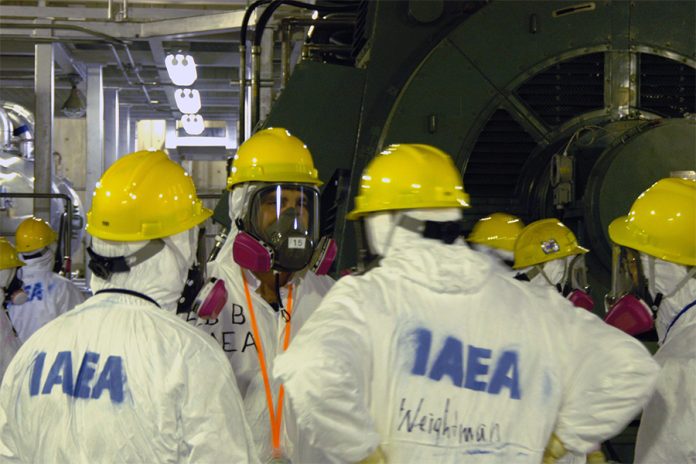
| Inspection Regime | Extensive IAEA inspections | Verification framework pending |
| Sanctions Relief | Structured and phased | Conditional and phased |
| Ballistic Missile Issues | Limited coverage | Subject of future talks |
| Regional Security Issues | Largely outside agreement | Part of broader negotiations |
| Strait of Hormuz | Not central to agreement | Major component |
| Context | Diplomatic negotiations | Post-conflict stabilization |
| Status | Fully negotiated agreement | Framework awaiting detailed talks |
The bottom line: The JCPOA was a completed nuclear agreement. The new Trump framework is the opening chapter of a negotiation whose most important details have yet to be written.