

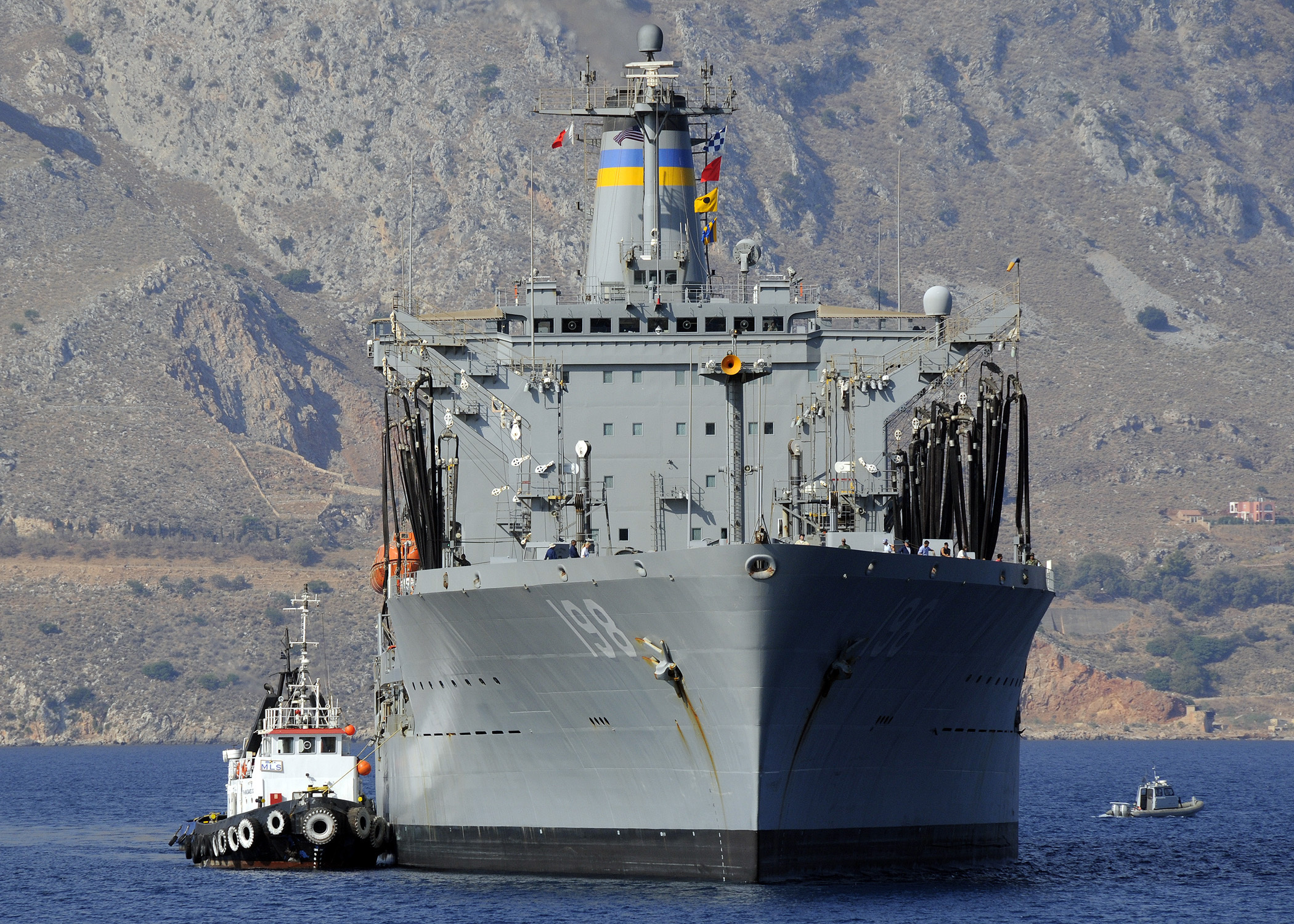
The Military Sealift Command fleet replenishment oiler USNS Big Horn arrives in Souda Bay for a routine port visit.
The U.S. Navy faces a critical fuel shortage in the Middle East after the naval replenishment ship USNS Big Horn ran aground off the coast of Oman, temporarily cutting off fuel supplies to the Abraham Lincoln Carrier Strike Group. The incident has prompted concerns about the Navy’s ability to maintain operations in the region.
According to Navy sources, the 33-year-old vessel suffered damage to its rudder and took on water after running aground. It is currently anchored off the coast of Oman awaiting a full assessment of the damage. No injuries or environmental damage were reported.
The USNS Big Horn is one of the Navy’s older single-hull tankers, part of the Kaiser-class ships that have been supplying fuel to carrier strike groups for decades. These single-hull ships are increasingly seen as vulnerable in modern operations, especially after safety standards required double-hull construction following the Exxon Valdez oil spill in 1989.
This incident leaves the Abraham Lincoln Carrier Strike Group without its primary fuel supply, raising concerns about operational readiness. A commercial tanker is being considered as a temporary solution, but retrofitting such a vessel to handle the complex task of refueling warships at sea could take time and requires highly skilled crews to manage the process.
The Navy has been dealing with a shortage of replenishment ships and trained crews, and the loss of the USNS Big Horn exacerbates an already critical issue. The Navy is in the process of launching new John Lewis-class tankers, but experts warn that this effort may not be enough to address the broader tanker shortage facing the U.S. military.
The incident highlights the challenges the Navy faces in maintaining a steady supply line, particularly in the Pacific, where a major conflict could severely test the fleet’s capacity to stay fueled. Without an adequate number of tankers, the Navy’s ability to sustain operations in the event of a conflict is at risk, leaving even the most advanced aircraft carriers reliant on consistent refueling.
The Navy’s challenges have been compounded by the closure of the Red Hill fuel depot in Hawaii due to a fuel leak, further straining the supply chain. Industry experts and Navy officials agree that rebuilding a robust fleet of tankers and trained personnel is essential, but caution that these solutions will take time and significant investment.