

The Pentagon has removed two successive senior military strategists in a year. With American forces facing commitments around the globe, the question isn’t just who got fired. It’s who’s left to challenge the war plans.
WASHINGTON — Winning a battle is one thing. Winning a war is something else entirely.
Ask the veterans of Vietnam, Iraq or Afghanistan.
American troops can take the objective, destroy the enemy’s equipment and accomplish every mission handed down from headquarters. But if the people drawing up the strategy haven’t figured out what comes next, those troops may find themselves fighting another battle, another campaign or another year of war.
That’s why the Pentagon needs officers willing to ask hard questions before the shooting starts.
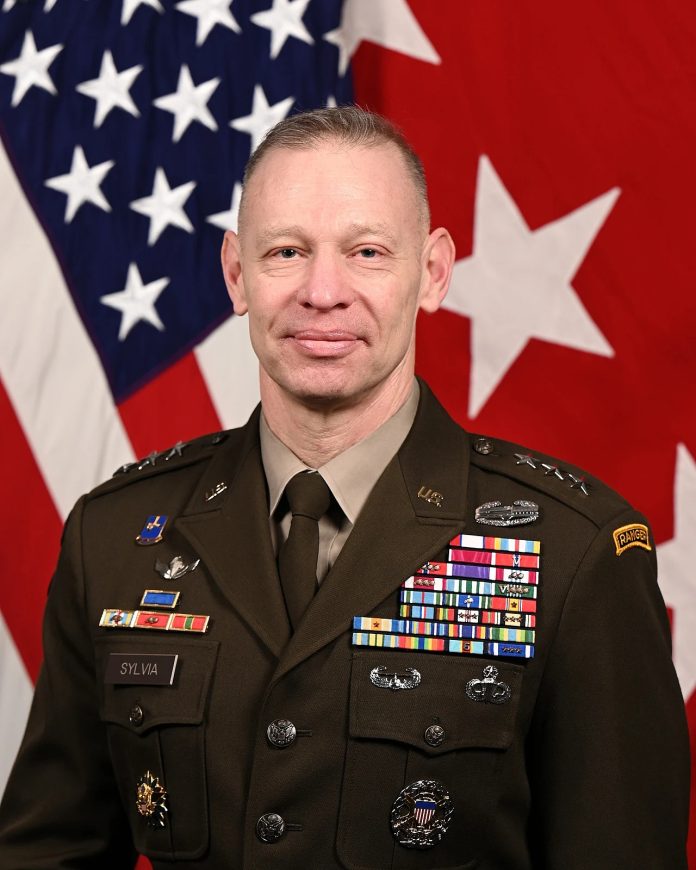
And that’s why the firing of Army Lt. Gen. Brett Sylvia deserves more attention than another headline about a general getting the boot.
Defense Secretary Pete Hegseth fired Sylvia on Thursday, Oct. 29, following an investigation into allegations that the three-star general leaked classified information about the Iran war, Russia’s war in Ukraine and other military matters.
The Pentagon says Sylvia failed three polygraph examinations and met journalists outside the building to circumvent restrictions on press access.
Those are serious accusations.
They’re also accusations the Pentagon has yet to substantiate publicly.
CBS News reported that two Pentagon sources disputed the allegations. The Washington Post reported that a colleague familiar with Sylvia’s position said the general denies leaking classified information.
The case has been referred to the Justice Department. No criminal charges had been publicly announced as of Thursday.
But there’s another part of this story getting considerably less attention.
Sylvia was the director of the Joint Staff’s Directorate for Strategy, Plans and Policy.
In Pentagon shorthand, that’s the J5.
And Sylvia is the second J5 director removed in a year.
His predecessor, Lt. Gen. Joseph McGee, was forced into retirement in October 2025.
Two experienced Army generals. Two successive directors of one of the Pentagon’s most important strategic planning organizations. Both gone within a year.
That ought to raise a few questions.
The People Who Ask What Happens Next
The Pentagon has plenty of officers who know how to fight.
The combatant commanders have staffs that develop operational plans. They calculate what forces are needed, where those forces must go and how military objectives can be achieved.
U.S. Central Command, for example, is responsible for planning and conducting military operations against Iran within its area of responsibility.
But somebody has to look beyond CENTCOM’s battlefield.
That’s where the J5 comes in.
The directorate helps develop military strategy, coordinates planning across combatant commands and examines how military operations support national objectives.
It also helps the chairman of the Joint Chiefs of Staff assess strategic risks and provide military advice to civilian leaders.
In plain English, the J5 helps determine whether the military’s plans make sense when everything else is taken into account.
Suppose the Pentagon decides it needs another aircraft carrier in the Middle East.
Fine.
Where does that carrier come from?
The Pacific?
What happens to the Navy’s ability to respond to a crisis involving Taiwan?
What happens to the carrier’s maintenance schedule, its aircraft, its escorts and the sailors who have already spent months at sea?
And what happens if the war in the Middle East lasts longer than anyone expected?
These are not academic questions.
They involve real ships, real aircraft, real ammunition and real people.
The J5 is one of the organizations responsible for helping senior military leaders examine those trade-offs.
It doesn’t command the ships or order the strikes. It doesn’t have the authority to tell the president whether to go to war.
Its job is to help ensure the chairman’s military advice accounts for the risks, consequences and competing demands.
That may not sound glamorous.
Neither does counting ammunition.
But armies have lost wars because somebody forgot to do both.
We’ve Seen This Movie Before
In February 2003, Army Chief of Staff Gen. Eric Shinseki appeared before the Senate Armed Services Committee.
The United States was preparing to invade Iraq.
American forces had the firepower to defeat Saddam Hussein’s army. Few serious military observers doubted that.
But Sen. Carl Levin wanted to know how many troops would be needed to secure Iraq after the fighting.
Shinseki estimated that several hundred thousand soldiers might be necessary.
His answer wasn’t particularly welcome.
Deputy Defense Secretary Paul Wolfowitz publicly dismissed the estimate as wildly off the mark.
Defense Secretary Donald Rumsfeld also challenged the assumptions behind large postwar troop requirements.
The invasion began the following month.
Baghdad fell in April.
Then came the insurgency, sectarian violence, roadside bombs and years of fighting that cost thousands of American lives.
Shinseki hadn’t predicted every disaster that followed.
He had done something military leaders are supposed to do.
He warned that defeating an enemy army and securing a country were two different missions.
The distinction should have been obvious.
It wasn’t.
And American troops paid for that failure in blood.
The Second Man Out
Sylvia wasn’t some newly minted staff officer who wandered into the Pentagon looking for a desk.
He was a career soldier with approximately 32 years of service.
He commanded the 101st Airborne Division, served in Iraq and Afghanistan, and held senior positions involving operational planning and military leadership.
He also previously served as vice director of the J5.
His predecessor, McGee, had commanded the same division and held senior military assignments before becoming J5 director.
Both had considerable experience with the consequences of military decisions.
Now both are gone.
That doesn’t mean either man was fired for disagreeing with civilian leadership.
There is no publicly established evidence that Sylvia’s dismissal resulted from a dispute over military strategy.
And there is no evidence that the two removals were part of a coordinated effort to eliminate dissent within the Joint Staff.
But removing two successive directors of the same strategic planning organization in a year is unusual enough to warrant an explanation.
Especially when American forces are confronting military commitments in several parts of the world.
The Pentagon owes the public an answer to a straightforward question.
Has the J5’s role in developing military strategy changed?
And if it has, who is now responsible for ensuring that competing military commitments receive the scrutiny they require?
Who Is Running the J5?
The Joint Staff’s strategic planning organization still has senior leadership following Sylvia’s dismissal.
Rear Adm. Frederic C. Goldhammer, a Navy flag officer, is listed as vice director for Strategy, Plans and Policy.
The Navy’s official flag officer roster confirms Goldhammer has held the position since May 1, 2026.
The Pentagon has not publicly announced whether Goldhammer has been designated acting director or who will permanently replace Sylvia.
The distinction matters.
The J5 is responsible for helping the chairman of the Joint Chiefs of Staff evaluate military strategy, coordinate planning across combatant commands and assess risks to national security objectives.
Those responsibilities continue regardless of who occupies the director’s office.
What remains unclear is whether the directorate’s leadership change will affect its role in developing military strategy or providing advice to the chairman.
The Pentagon Says CENTCOM Does the Planning
An unnamed Pentagon official told Military.com that Sylvia was not a central planner for the Iran war.
The official said operational planning was the responsibility of CENTCOM and its commander, Adm. Brad Cooper.
That’s true as far as it goes.
CENTCOM is responsible for military operations in its theater.
But operational planning and strategic planning are not the same thing.
A combatant commander may determine how to destroy an enemy’s missile launchers.
The broader strategic question is whether destroying those launchers accomplishes the nation’s objectives, what happens if the enemy retaliates and what other American military commitments may suffer as a result.
Those questions extend beyond any single combatant command.
The Joint Staff exists in part to help the chairman assess such matters across the entire military.
And the J5 is central to that work.
Dismissing the significance of its director because he wasn’t personally drawing up CENTCOM’s attack plans misses the point.
A football team has coaches who design plays.
It also needs somebody watching the whole field.
The Pentagon is no different, except that a bad play can cost lives.
The Leaks and the Leakers
Then there’s the investigation itself.
The Pentagon alleges that Sylvia disclosed classified information to journalists.
If he did, he should be held accountable under the law.
Classified military information can reveal capabilities, intelligence sources, operational plans and vulnerabilities that adversaries could exploit.
Unauthorized disclosures can endanger service members.
But allegations are not convictions.
The Pentagon has not publicly identified the information Sylvia allegedly leaked or presented evidence establishing that he disclosed it.
Officials say he failed three polygraph examinations.
Polygraphs measure physiological responses. They do not independently establish that someone committed a crime.
Investigators may use them as part of a broader inquiry, but their results are not a substitute for corroborating evidence.
The Pentagon also alleges Sylvia met journalists outside the building because reporters now face restrictions on their movements inside.
So what?
Military officers have spoken with reporters outside the Pentagon for decades.
Meeting a journalist isn’t a crime.
Disclosing classified information without authorization can be.
The difference ought to be understood by everyone involved.
There’s also a curious feature of this investigation.
While Pentagon officials publicly emphasize the seriousness of unauthorized disclosures, unnamed officials have provided journalists with detailed allegations about Sylvia’s conduct.
Authorized disclosures and unauthorized leaks are legally different matters.
Still, the public is entitled to ask why damaging accusations about an ongoing investigation are being distributed anonymously before the evidence has been presented.
If the Pentagon has a case, let the investigation establish it.
If prosecutors believe a crime occurred, let them pursue it.
But don’t confuse an anonymous official’s accusations with a finding of guilt.
Somebody Has to Tell the Boss He’s Wrong
Civilian control of the military is fundamental to the American system.
The president and secretary of defense make policy decisions. Military leaders provide professional advice and carry out lawful orders.
That arrangement works best when the advice is candid.
A general who tells the boss what he wants to hear may have a promising career.
That doesn’t mean he’s doing his job.
Military history is littered with campaigns that looked good on briefing slides and fell apart when the shooting started.
The enemy didn’t follow the plan.
The supplies didn’t arrive.
The ammunition ran short.
The war lasted longer than expected.
Or the troops accomplished their military objectives only to discover that nobody had figured out what victory was supposed to look like.
That’s why the Pentagon needs officers who can challenge assumptions before those assumptions become orders.
The J5 is not the only organization responsible for that work. The chairman, the Joint Staff, the combatant commands and civilian defense officials all have roles in evaluating military strategy.
But the J5 is one of the places where those difficult questions are supposed to receive sustained professional attention.
And its director is supposed to have the experience and judgment to help answer them.
The Question That Matters
Sylvia’s case may ultimately produce criminal charges.
It may not.
The investigation should determine whether he violated the law, and the evidence should determine the outcome.
But the Pentagon has another question to answer.
After removing two successive J5 directors, has anything changed in the way senior military leaders receive strategic advice?
Are officers still encouraged to challenge assumptions?
Can they tell the chairman that a proposed military operation carries unacceptable risks?
Can they warn that the United States is committing forces it may need somewhere else?
And can they do so without worrying that an unwelcome assessment will end their careers?
Those questions matter to every soldier, sailor, airman, Marine and guardian who may be ordered into harm’s way.
Because the people who make war plans don’t usually have to execute them from a muddy fighting position, a ship at sea or a cockpit over hostile territory.
The troops do.
And when the plan goes bad, they’re the ones who pay the price.
The Pentagon has explained why it says Brett Sylvia had to go.
It hasn’t explained what losing two successive J5 directors means for the military’s strategic planning.
That answer is worth pursuing.
Before the next war plan becomes somebody else’s deployment orders.